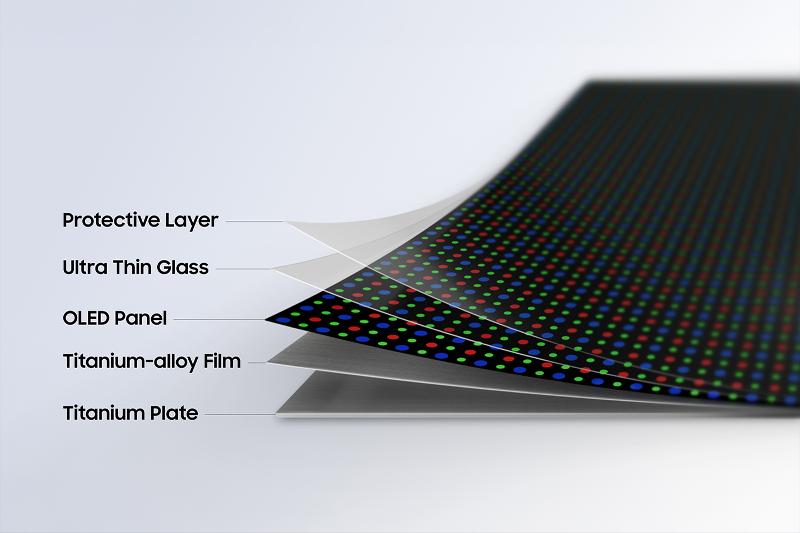
Samsung introduced Flex Titanium, a foldable display structure built around a titanium-alloy film and a titanium support plate. The company said the approach will appear in its next generation of Galaxy foldables. The pitch targets crease visibility and screen fragility.
The film sits beneath the OLED panel. The plate supports the stack from below. Samsung claims the film is far stiffer than the polymer it replaces. Firmer support, it says, reduces visible hinge distortion and spreads impact more evenly.
Those are laboratory claims, not multi-year field results. Foldable buyers care about crease visibility after a year in a pocket. They care about debris near the hinge, drop damage, and repair cost. Marketing stiffness numbers do not settle those questions alone.
Samsung has every reason to keep pushing materials. Foldables are a prestige category and a repair headache. A tougher stack could lower warranty costs and make the crease less of a demo-killer in stores. It could also be incremental: better than last year, still not glass-phone tough.
If you are waiting on the next Fold or Flip, treat Flex Titanium as a materials story to verify in hands-on reviews. Watch repair pricing once devices ship. A stronger panel that still costs half a phone to replace is only a partial win.
Dust and grit deserve as much attention as bend-cycle marketing. Many real-world failures start with particles near the hinge, not a single dramatic fold. Stiffer films help if they reduce panel deformation. They do not magically seal the hinge.
For everyone else, this is incremental display engineering news. It matters most if you already live on a foldable and break screens more often than you want to admit. If you are happy on a slab phone, nothing here is a reason to switch.
Service networks matter as much as the stack diagram. A tougher panel only helps if authorized repair exists near you and parts are in stock. Ask about out-of-warranty screen pricing when preorders open.
Competing foldable makers will answer with their own metal films, ultra-thin glass recipes, and hinge redesigns. The category improves in steps, not leaps. Buyers who wait three years usually see a larger jump than people who upgrade every generation.
Samsung will put Flex Titanium in the next marketing cycle with clean cross-sections and big numbers. Your job as a buyer is to wait for long-term crease photos, drop tests, and the out-of-warranty repair quote.